Fishin Frenzy Myths: What Actually Moves the Needle
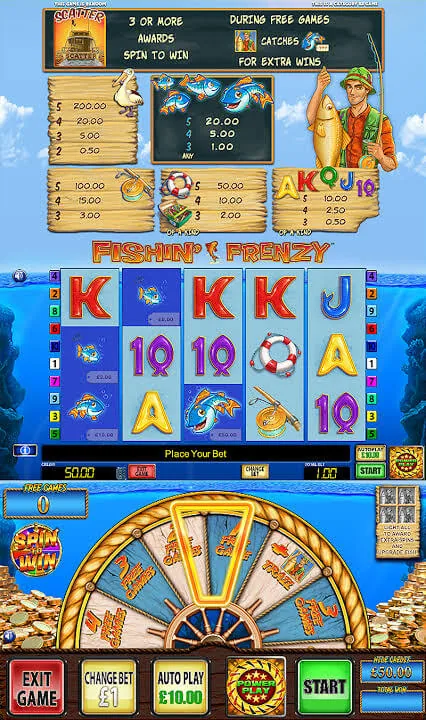
The reels stop. Three fisherman scatters land. The feature board opens, fish symbols flip to cash prizes, and the round counter ticks down. You're inside Fishin Frenzy, Blueprint Gaming's most-played slot in UK casinos, and somewhere between the splashes and the jingle, you've probably heard a dozen « strategies » for when to spin, how much to bet, or which pattern predicts the bonus.
None of them work. The game runs on a random number generator audited by testing labs and licensed by the UK Gambling Commission. Every spin outcome is decided before the reels animate, and no amount of timing, pattern-reading, or stake juggling changes the next result. What you can control: your stake, your stop point, your session structure, and which volatility profile matches your budget. This piece strips the myths from the levers that actually matter.
The Myths That Cost You Money
Hot and cold streaks don't exist in RNG slots. The generator picks a number every millisecond, mapped to a reel position. A ten-spin losing run doesn't make the eleventh more likely to win, and three bonus rounds in twenty spins doesn't mean the feature is « due to cool off ». Each spin is independent, with the same probability as the last.
Changing your stake mid-session won't trigger the bonus. Some players double the bet after a dry spell, hoping the algorithm « notices ». It doesn't. The RNG doesn't track your balance, your bet history, or the time since your last scatter. The feature trigger rate is baked into the maths model—roughly 1 in 169 spins at any stake within the £0.10 to £5.00 range permitted under UKGC rules (£2.00 cap if you're 18 to 24).
- « Stop the reels early to land the symbol you want » — the outcome is set at the moment you press spin, not when the animation finishes.
- « Play at 3 a.m. when the site is quiet » — server load and time of day have zero influence on RNG output.
- « Demo mode is tighter than real money » — both modes use the same RNG and RTP; perceived differences are sample-size illusion.
The only pattern that matters is your own spending. If you chase losses or raise stakes to « win it back », you're deepening the hole faster than RTP variance can fill it.
What You Actually Control
Stake per spin sets your exposure per round and your effective playing time. At £1.00 a spin with a £50.00 budget, you get fifty attempts (minus wins that extend the session). At £5.00, you get ten. Medium volatility means moderate swings, but a ten-spin sample is too small to see the RTP play out; a single dead feature eats half your budget.
Stop-loss is the clearest lever. Decide before the session starts: if you drop £30.00, you close the game. No top-up, no « one more bonus ». UKGC operators must offer deposit limits and reality checks (periodic pop-ups showing time and net loss). Use them. Affordability checks kick in from £150.00 net deposits a month, pulling credit-reference data at the first tier, so the regulator expects you to front-load your own limits.
Session structure: fixed stake, fixed stop-loss, fixed target. If you hit £80.00 profit on a £50.00 start, bank £60.00 and play the remaining £20.00 as house money. That target isn't a « system »—it's arithmetic that locks in a win before variance reverses it.
Reading Volatility in Practice
Blueprint lists Fishin Frenzy as medium volatility, which means moderate hit frequency (you'll land small wins often enough to slow the bleed) and moderate feature potential (the free spins rarely deliver 100× your stake, but they won't brick completely every time). Compare that to a high-variance slot where fifty dead spins are normal and the bonus can pay 500× or zero.
Medium volatility suits a smaller budget because the swings are gentler. You're less likely to lose ten spins in a row, and less likely to hit a 200× windfall that recoups a bad run. The trade-off: lower ceiling, lower floor. If you want slow, stable play and you're happy with modest wins, medium variance is the fit. If you're chasing a single huge multiplier and you're prepared to burn through three sessions to get one feature, high variance is honest about that bargain.
Volatility isn't a difficulty setting. It's a risk profile. Match it to your budget and your tolerance for losing streaks, not to a belief that one profile is « luckier » than another.
Expensive Mistakes
- Chasing losses with rising stakes. You've dropped £40.00 at £0.50 a spin, so you switch to £2.00 « to win it back faster ». The RTP is the same; you're just losing the same percentage of a bigger number.
- Playing without a stop-loss. You deposit £50.00, no plan, « just see how it goes ». You hit £90.00, keep spinning, and finish at zero. No structure means no defence against the house edge grinding you down.
- Topping up mid-session after breaking your limit. You set £50.00, lose it, deposit another £30.00 « because the bonus is due ». It isn't. The feature trigger is probabilistic, not deterministic.
- Ignoring KYC timelines on your first withdrawal. UKGC sites need proof of identity and address before they'll process a payout. That's 24 to 48 hours for document review, then another day or two for Faster Payments. If you're expecting instant cash, you'll be disappointed.
Structuring a Session with a Hard Limit
Start by defining three numbers before you log in: session budget, stop-loss threshold, and win target. Example: £60.00 budget, stop at £20.00 remaining (£40.00 loss), quit at £100.00 (£40.00 profit). Stake £0.50 per spin. That gives you 120 base spins if you land zero wins, but medium volatility means you'll stretch it further with small pays.
Set a deposit limit in your account settings to match your session budget. UKGC operators offer daily, weekly, and monthly caps. If you've set £60.00 for today, the system blocks further deposits once you hit that ceiling, regardless of whether you want to chase.
Use reality checks. Most sites let you configure a pop-up every 15, 30, or 60 minutes showing elapsed time, total wagered, and net position. It's a forced pause. You'll see the numbers in black and white, outside the rhythm of the spins.
When you hit your stop-loss or your win target, close the browser tab. Don't switch games, don't check your balance « one more time ». The session is over. Log the result—win or loss, time played, final balance—so you can track patterns in your own behaviour over a month, not guess from memory.
Where Regulation Changes the Game
The £5.00 stake cap (£2.00 for players aged 18 to 24) is a hard ceiling across every UKGC-licensed site. You can't bet £10.00 a spin on Fishin Frenzy, even if the operator's software would allow it on a Curaçao licence. That cap exists to limit per-spin loss, especially on high-RTP, low-volatility slots where players can burn through hundreds of pounds in minutes.
Affordability checks start from £150.00 net deposits in a calendar month. The operator pulls soft credit-reference data (no impact on your credit score) to verify you can afford the spending. If the data raises flags, they'll ask for payslips or bank statements. It's intrusive, but it's the trade-off for legal access. Unlicensed sites skip the checks, but they also skip consumer protection, dispute resolution, and GAMSTOP self-exclusion.
GAMSTOP is the national self-exclusion register. One sign-up blocks every UKGC operator for six months, one year, or five years. If you're finding it hard to stick to your limits, that's the circuit-breaker. BeGambleAware and GamCare offer free, confidential support; the phone line is 0808 8020 133.
Winnings are tax-free for the player. You keep every pound you withdraw. The operator pays the duty—now 40% Remote Gaming Duty as of April 2026, up from 21%—which is why welcome offers and comp programmes have tightened. The house edge still grinds, but at least HMRC isn't taking a slice of your profit.
The Honest Bottom Line
There is no system that beats the RNG. The maths model is fixed, audited by labs like eCOGRA and iTech Labs, and the outcomes are random within the published RTP and volatility range. Fishin Frenzy pays back 96.12% over millions of spins; your fifty-spin session is a single data point in that average, and it can land anywhere on the curve.
What separates a controlled session from a costly one: you decided the budget, the stop-loss, and the target before you started. You used the tools the operator provides—deposit limits, reality checks, session history. You treated the game as entertainment with a known cost, not a revenue stream you can optimise with the right timing or bet pattern.
Check the UKGC register before you deposit. Match the licence number in the site footer to the public database. If it's missing, or the operator is licensed in Curaçao or Malta but serving UK players, it's illegal under the Gambling Act and you've got no recourse if something goes wrong. The regulator's protections only apply to licensed sites, and those protections—dispute resolution, segregated funds, self-exclusion, stake caps—are the reason you're playing on a legal platform in the first place.
FAQ
Can I use a pattern or timing trick to trigger the bonus in Fishin Frenzy?
No. The game uses a random number generator that picks outcomes independently every spin. Timing, bet size changes, and session history have zero influence on when the feature lands. The scatter trigger rate is baked into the maths—roughly 1 in 169 spins—and no player action alters that probability.
Is demo mode rigged to feel looser than real money play?
No. Both demo and real-money modes run the same RNG and the same RTP. Perceived differences come from small sample sizes and confirmation bias. A lucky demo session and a losing real-money session are both normal variance, not evidence of different game logic.
What's the best stake per spin for a £50.00 budget?
£0.50 or lower. At £0.50 you get 100 base spins (before wins extend the session), which gives medium volatility room to play out. At £1.00 or higher you risk burning the budget in a short losing streak before the RTP average has any chance to surface. Match stake to playing time, not to a belief that higher bets trigger features.
How long does the first withdrawal take on a UKGC site?
24 to 48 hours for KYC document checks (proof of ID and address), then another one to three working days for Faster Payments to reach your bank. E-wallets like PayPal are quicker—often same-day after verification—but the first payout is always the slowest because of compliance. Plan accordingly and don't expect instant access to winnings.